

Most productivity advice hands a neurodivergent brain the same quiet instruction: just try harder. Focus more intensely, remember more clearly, stay more organized — all with the same internal machinery everyone else is told to use. If that advice has ever left you more exhausted than organized, the problem was never the amount of effort you put in. It was the instruction itself. Asking a brain that processes information differently to succeed by sheer internal willpower isn't a plan; it's a slow road to burnout.
There's a more sustainable path, and it isn't about doing more. It's about changing where the work happens. Researchers call it cognitive offloading — using a physical or digital action to reduce the demand on your mind (Risko & Gilbert, 2016). In plain terms: you move information out of your head and into your environment, so your brain doesn't have to hold everything at once. It's less "remember harder" and more "build somewhere reliable to put things down."
The great equalizer for working memory
The thing that quietly makes so many days harder is working memory capacity (WMC) — how much you can hold and juggle in your mind at the same time. For a long time this was treated as a fixed ceiling: some people simply have more room, and that's that.
Newer research complicates that story in a hopeful way. In a set of experiments using letter-string tasks (typing out sequences from memory) and intention offloading (setting up external cues to trigger a future action), Richmond et al. (2025) found that offloading helps the people who need it most. Participants with lower WMC benefited more from external aids than those with higher capacity. When everyone was allowed to offload, the gap between low and high working memory all but vanished.
« Offloading can be an effective strategy to 'close the gap' in performance that is typically exhibited for participants with low versus high WMC. » (Richmond et al., 2025)
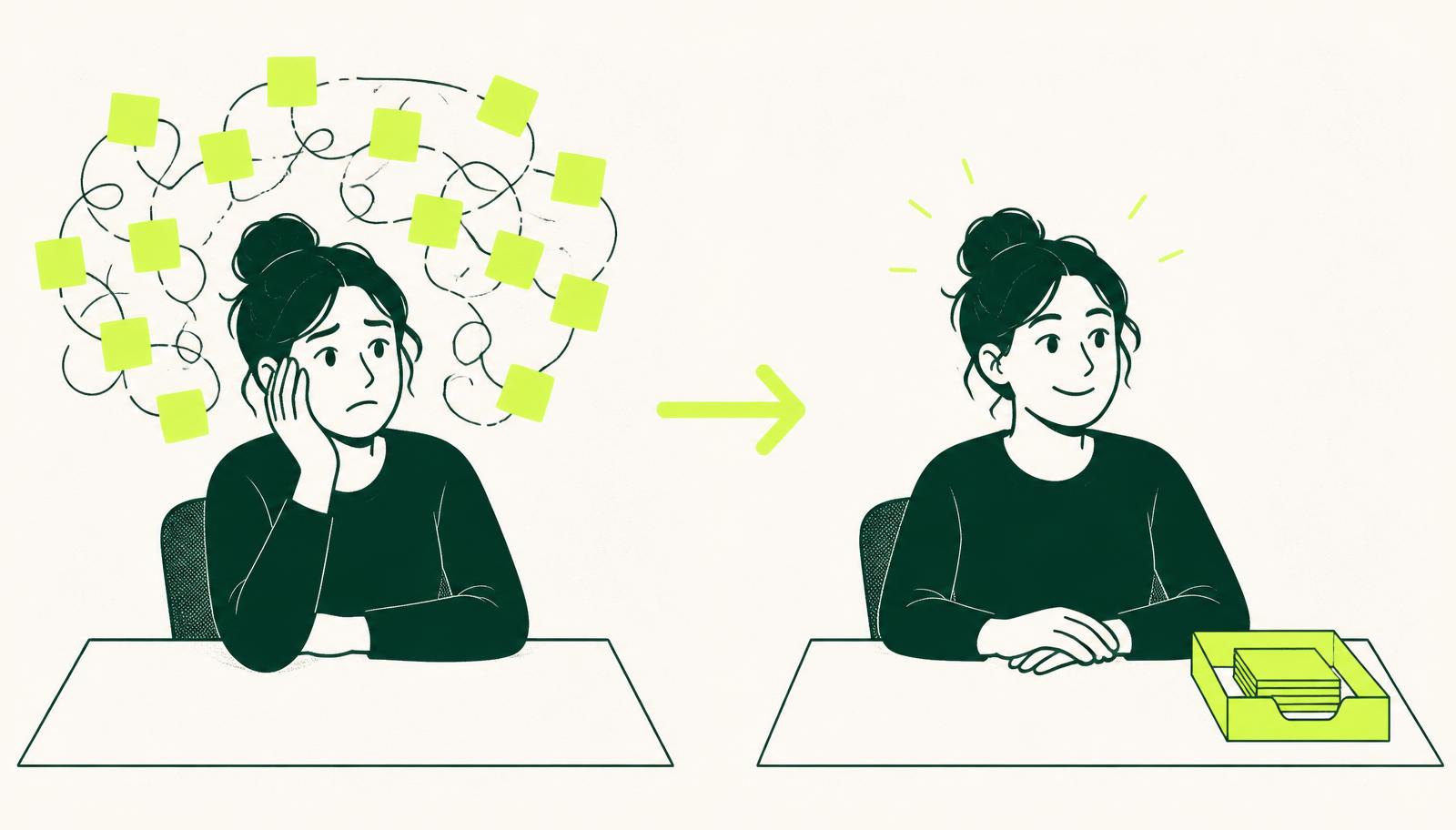
Read that again, because it reframes everything. Your tools aren't a consolation prize for a brain that "can't keep up." They're the mechanism that levels the field — the thing that lets your output look like someone working with far more internal room.
Offload the "what" so you have space for the "when"
It helps to notice that your brain is actually carrying two different kinds of weight (Richmond et al., 2025). Retrospective memory is remembering what something is — the details of a note, the contents of a message, the five things on the list. Prospective memory is remembering to do something at the right moment — to send the email at 2 p.m., to actually act when the time comes.
Neurodivergent days often fall apart because the brain spends its whole energy budget clutching the "what," leaving nothing for the "when." You remember the task exists all day — and still miss the moment to do it. Offloading targets exactly this. Neuroimaging suggests that moving information out of your head lightens the retrospective load specifically, freeing up the resources you need for timing and follow-through. Put the details somewhere reliable, and you get your "when" back.
Saving things doesn't make you lazy
There's a fear underneath a lot of this: if I let a tool hold it, my brain will get weaker. The research points the other way. There's a well-documented "saving-enhanced memory" effect — when your brain trusts that one batch of information has been safely stored, it actually gets better at learning the next thing (Storm & Stone, 2015). Reliably setting something down clears the workspace so you can pick up what's next.
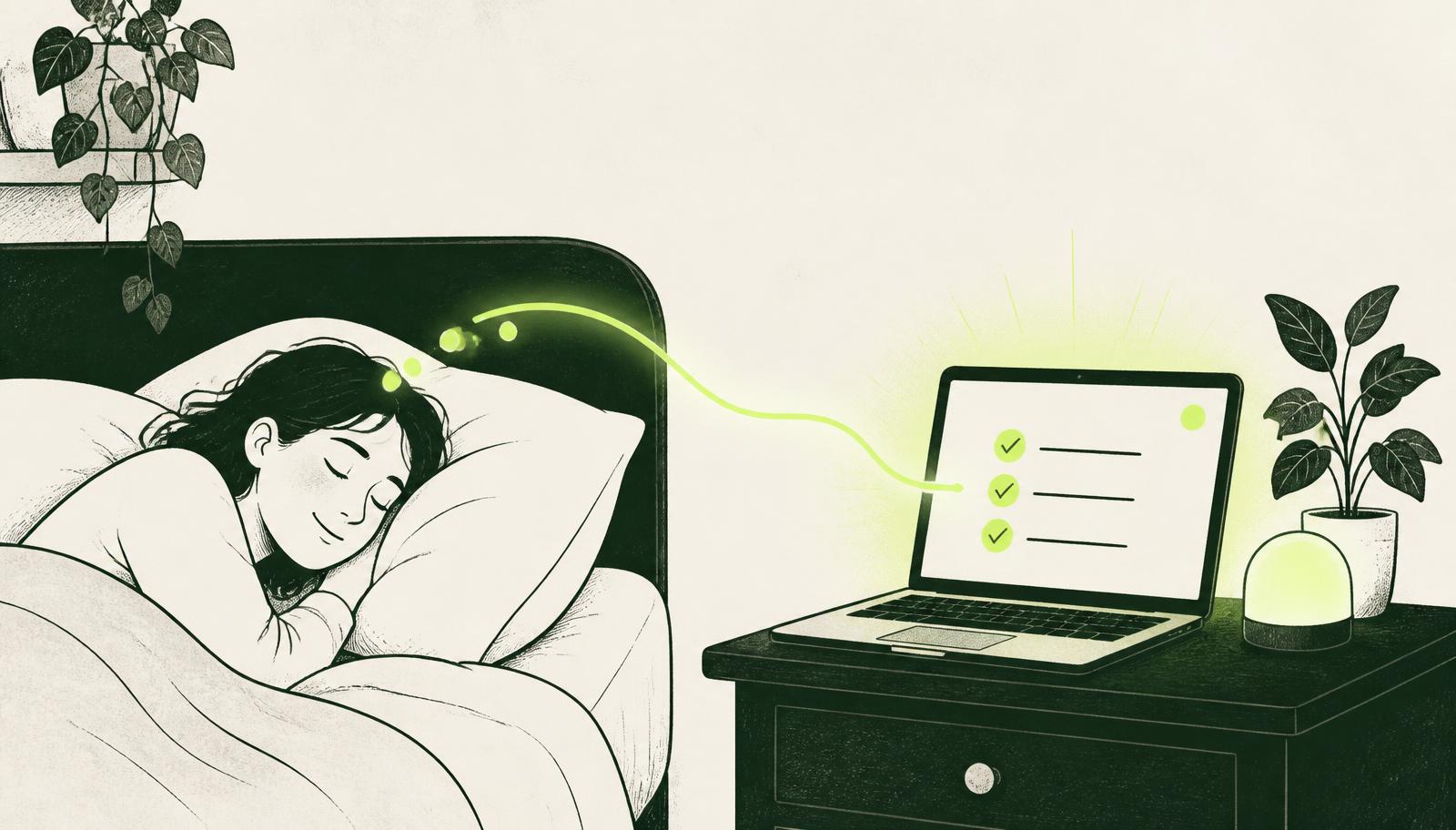
But there's a catch worth naming, because it's the whole game: this only works if the saving is reliable. If your system is glitchy, scattered, or you're half-sure things vanish into it, your brain quietly refuses to let go — and the mental clutter stays. A trustworthy system doesn't make you less capable. It's the precondition for your brain relaxing enough to take on something new. This is exactly why the goal isn't just "a place to put things," but a place you genuinely trust.
AI as an adaptive layer of your thinking
A paper list is a fine start. But the more interesting frontier for neurodivergent productivity is a system that can adapt to you. Work on AI in learning points toward personalized tools that respond to different rhythms and styles of understanding rather than forcing one rigid workflow (Pico Quijije et al., 2024).
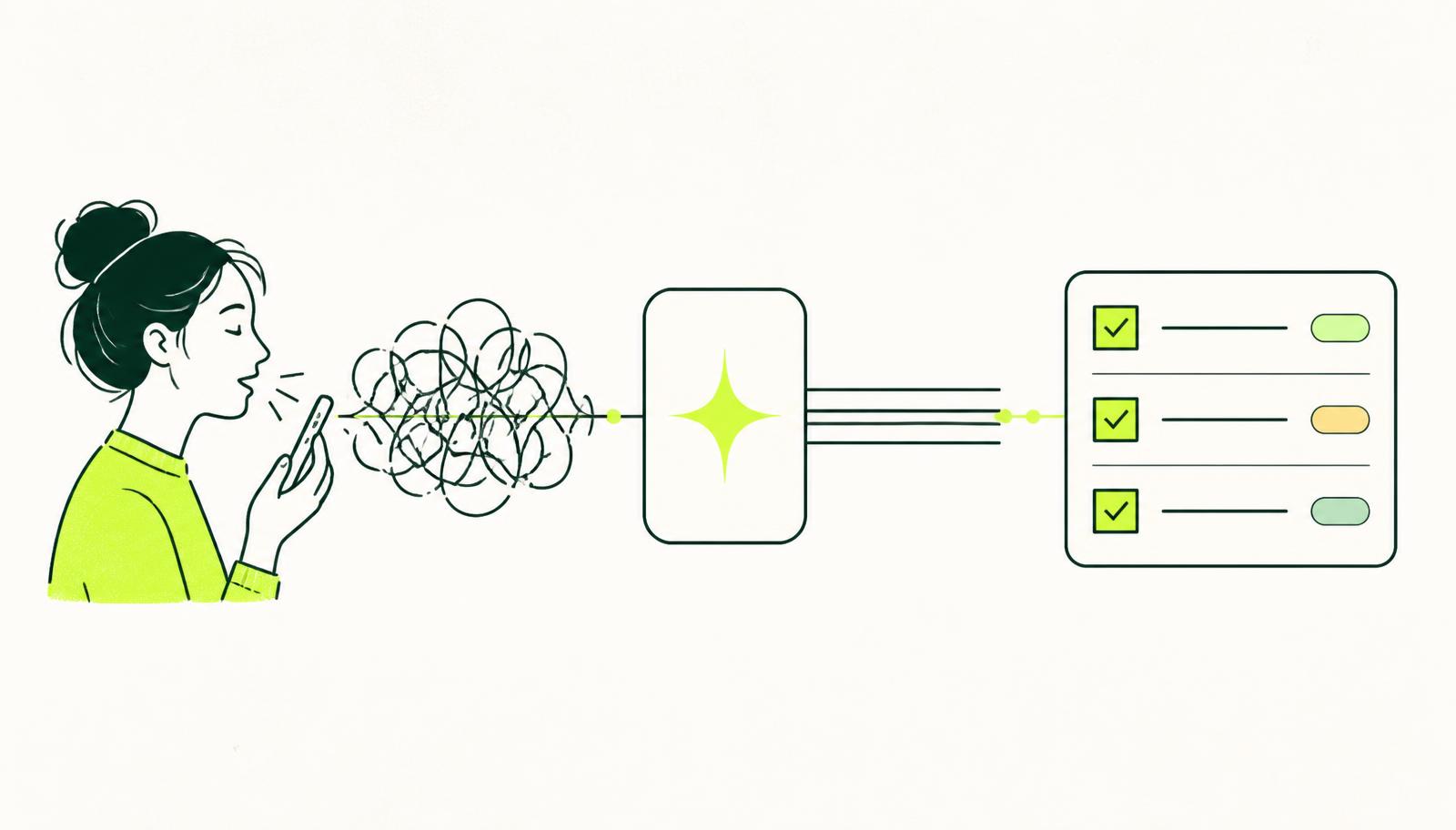
An AI assistant can act less like static storage and more like an extension of your own thinking. It can take a messy, spoken brain-dump and sort it into what's a task, what's a note, and what can wait — carrying the prospective load of "what's the next sensible step" so you don't have to. This is the heart of how NeuroDeepFlow is built: you speak the thought, an assistant does the sorting, and the result lands, already organized, somewhere calm. The intelligence lives in the system, not in how hard you're gripping your own attention.
So why don't we do it? The metacognitive trap
Here's the frustrating part. Even when we know offloading would help, we often don't. And it's not for the reasons you'd guess: Richmond et al. (2025) found that neither low working memory nor low confidence in your own memory reliably predicted whether someone actually chose to offload.
The real culprits are quieter. Strategy perseveration is the pull to keep using a familiar method — the internal "try harder" approach — even when it clearly isn't working; it's known, so it feels safer, even as it fails you. Effort-avoidance is the lopsided cost-benefit check your brain runs in the moment: setting up a reminder feels like effort now, while just-remembering-it feels free, so you pick the path of least resistance now and pay for it later, when the thing slips.
Breaking the cycle takes more than owning a nice tool. It takes consciously retiring the idea that internal effort is somehow nobler than external help. It isn't. It's just costlier.
A gentler, more sustainable strategy
Neurodivergent productivity was never about repairing a "broken" memory. It's about building an external system that respects your internal limits — and then practicing with it until offloading becomes a skill rather than an afterthought. The research is consistent on that last point: this works with practice, not overnight.
So it's worth retiring the word "crutch." Your tools and your AI assistant aren't props for a brain that can't cope; they're part of your cognitive architecture. When you hand the retrospective weight of your life to a system you actually trust, you don't just move faster — you work in step with how your brain is built, instead of against it.
One honest note: this is an approach for organizing your thinking, not medical advice. It won't diagnose or treat anything, and it isn't a substitute for support from a professional who knows you. It's simply a way to make the carrying lighter.
So here's the question to sit with: what's one mental weight you're hauling around today that a reliable system could hold for you instead?
If you'd like that system built for you rather than assembled from scratch, NeuroDeepFlow is quietly opening a waitlist. Adding your name costs nothing and commits you to nothing — it just holds your place for a calmer way to work, whenever it's ready for you.
References (4)+
- Pico Quijije, M. Á., López Pinargote, J. A., & Navarrete Zambrano, E. E. (2024). Revisión de estudios sobre la inteligencia artificial adaptada en la educación [Review of studies on adapted artificial intelligence in education]. Revista Odigos, 5(2), 53–68. https://doi.org/10.35290/ro.v5n2.2024.1250
- Richmond, L. L., Burnett, L. K., Kearley, J., Gilbert, S. J., Morrison, A. B., & Ball, B. H. (2025). Individual differences in prospective and retrospective memory offloading. Journal of Memory and Language, 142, 104617. https://doi.org/10.1016/j.jml.2025.104617
- Risko, E. F., & Gilbert, S. J. (2016). Cognitive offloading. Trends in Cognitive Sciences, 20(9), 676–688. https://doi.org/10.1016/j.tics.2016.07.002
- Storm, B. C., & Stone, S. M. (2015). Saving-enhanced memory: The benefits of saving on the learning and remembering of new information. Psychological Science, 26(2), 182–188. https://doi.org/10.1177/0956797614559285
Frequently asked
What is cognitive offloading, in plain terms?+
It is any action that moves mental work out of your head and into your environment — writing a task down, setting a reminder, dictating a thought into a system. Instead of holding everything in working memory, you let something outside your head hold it for you.
Does relying on tools make my memory weaker?+
The research points the other way. Once your brain trusts that something has been saved reliably, it learns the next thing better — an effect known as saving-enhanced memory. The catch is reliability: a system you half-trust keeps the mental load exactly where it was.
Why don't I use reminders even when I know they help?+
Two quiet habits get in the way: sticking with the familiar «just try harder» method, and avoiding the small effort of setting a cue right now. Remembering it yourself feels free in the moment, and expensive later.
Does this only work for people with ADHD?+
No. Offloading helps everyone, but it helps people with lower working memory capacity the most — enough to close the performance gap between low and high capacity almost entirely.
Is this a substitute for ADHD treatment or coaching?+
No. This is an approach for organizing your thinking, not medical advice. It does not diagnose or treat anything and it is not a replacement for support from a professional who knows you.
This is the system, not just the theory.
NeuroDeepFlow packages the Claude setup, the Notion structure, and the daily routine into one thing you can run tomorrow morning.
Join the waitlistKeep reading

A deliberately small Notion setup for ADHD brains: one inbox, voice capture, and Claude doing the sorting — so you can neglect it for two weeks and still trust it.

An ADHD brain dump clears the mental noise fast. Here is a 90-second voice method that turns the chaos into a sorted list, without a system you have to maintain.